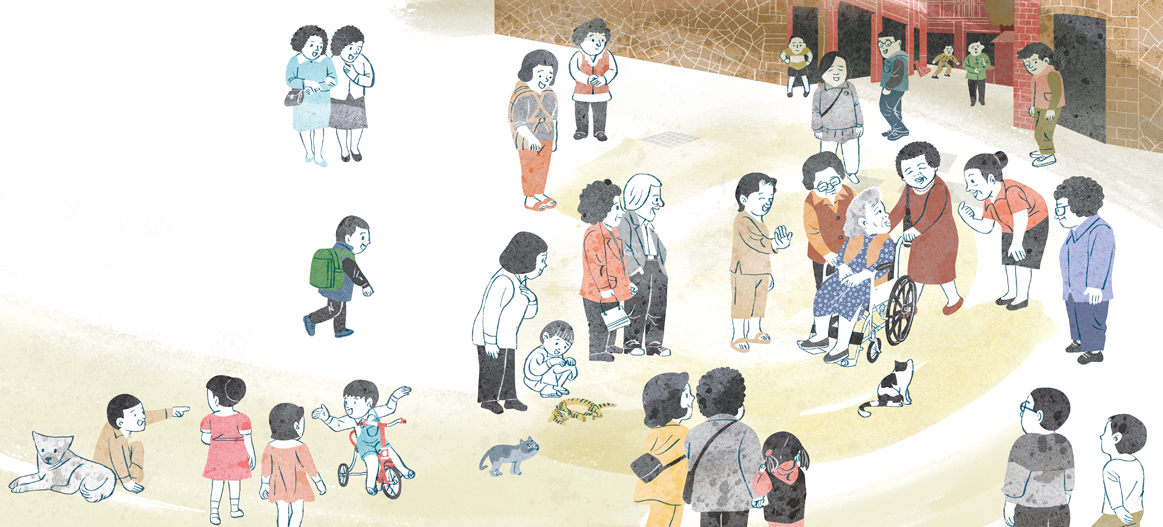
The Walking Stork - The Story of Tsai Chiao【Parent-Child Reading Guide】
點閱次數:155
Faith described
True to her given name, Tsai Chiao was gentle and nimble as a child of Lukang. After school, she helped club and weave bulrush, of which material her father, having given up cooperage due to falling demands, made hats. Her upbringing was Christian; she often accompanied her maternal grandmother to worship (serving as the latter’s walking stick when she was little). When Tsai turned about 18 and was looking for a career, the local minister, Lin Chao, referred her to Dr. David Landsborough III at Changhua Christian Hospital. The superintendent noted Tsai’s wit and earnestness. Before long, she was sent further afield to Mackay Memorial Hospital in Taipei to be schooled in nursing.
In those days, the Presbyterian hospitals—Mackay, Changhua, and Sin-Lâu—held joint nurse training. Clinical instruction was given by Dr. George Gushue-Taylor, who personally compiled the 3-inch-thick textbook. Tsai was apprenticed to Ms. Gretta Gauld, the head nurse, in patient-care tasks such as feeding, bathing, waste removal, body positioning, and round-the-clock monitoring. During the week, she shuttled between the departments of pediatrics, gynecology, obstetrics, and infectious diseases. On Saturdays, she trained at a leprosarium and worked night shifts. Each day of work at the hospital opened with a prayer gathering, where everyone took turns reading the Bible or sang with the choir. Tsai drew much joy from the custom, and was baptized at Shuang Lien Presbyterian Church aged 20.
"In ever more ardor, save lives, love the Lord, and partake in the church" was Tsai's motto that she held over a lifetime of nursing.
Faith embraced
It took Tsai two years to complete the nursing course and another year to master midwifery. She returned to the employment of Changhua Christian Hospital, where now as a dual-licensee she was expected to deliver newborns independently, for the practice back then was to leave doctors to difficult labors. For her technical proficiency and kind and courteous demeanor, Tsai was soon promoted to the position of head nurse. It was also around the same time that Tsai married Chen Fa-Ting, a veterinarian who had finished his studies in Japan. The couple worked for another while in central Taiwan before moving to the north, where Chen was rotated within the regions of Taihoku Prefecture and Tsai freelanced as a qualified midwife. Given that the colonial government had already banned privately-trained midwives, Tsai was actually able to bring home a stable and even generous income, especially in urban areas.
Those days of happiness did not last, however. Chen died of misdiagnosed peritonitis just as Taiwan was being mobilized by Japan for the Pacific War on the continent and beyond. With two young daughters to rear and no one else to turn to, Tsai was obliged to move in with her in-laws in Pinglin.
Pinglin was a small town deep in the hills, agricultural, hard to get to and around, and backward in healthcare. The town's women trusted the unlicensed midwives whom they had known since puberty, whereas giving birth in the presence of a stranger like Tsai, despite her impeccable qualifications, would make them uneasy and self-conscious. Tsai thus went unemployed for almost two years. It was not until she filled a vacancy in the town’s household registry that the former city professional was able to stand again on her own feet.
"For God so loved the world that he gave his only Son, so that everyone who believes in him may not perish but may have eternal life." (John 3:16) was Tsai's favorite verse from the Bible.
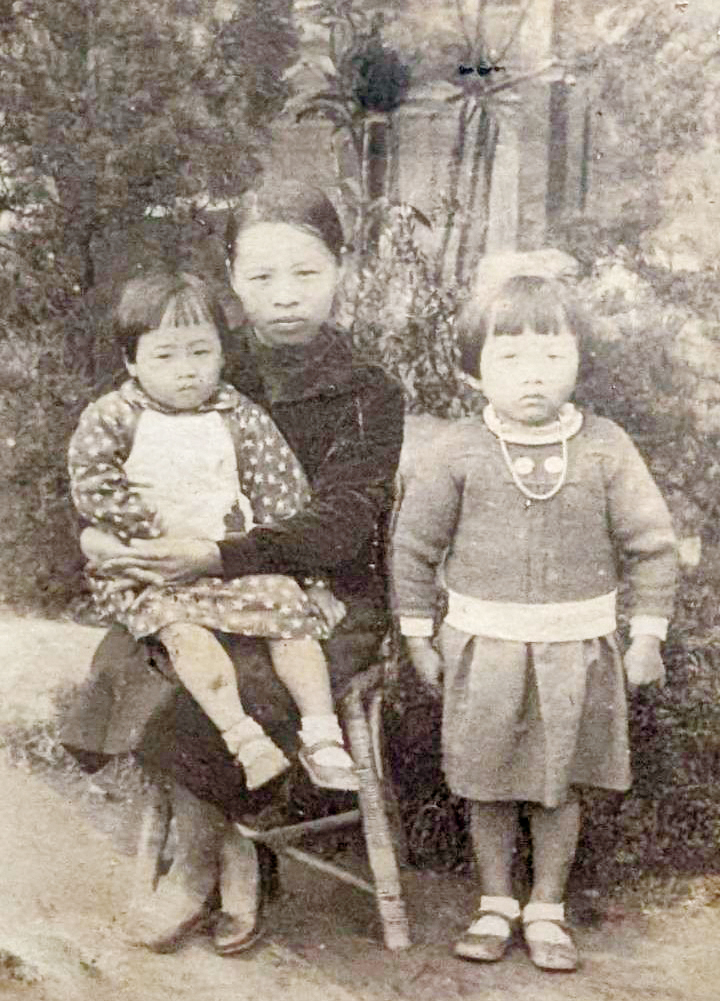
Tsai Chiao with her daughters
Faith embodied
When a stock of vaccines for a highly contagious disease, which may lead to miscarriages, birth defects, or fatal complications, arrived in Pinglin without a doctor to administer them, Tsai rediscovered her calling and volunteered. Armed with her experience on touring medical teams, Tsai took up her set of basic instruments and supplies and trod and clambered over the temperamental slopes of Pinglin's industrial roads—two shoulders wide with sections impossible to pedal across—to give vaccine shots and look after women and children. What may be known fashionably as health coverage or safety net today, Tsai wove, with her shank's mare, in and around the hills decades ago.
Tsai deemed midwifery a sacred undertaking. She would come through torrents or the dead of night to be at the sides of any expectant women who beckoned. She held firmly their hands, talked to them, and prayed with them for courage and strength until their offspring had come soundly to the world. Many who were afraid of an unacquainted midwife grew to trust and rely on Tsai's tender composure. Tsai never took red envelopes for her services, because she knew too well that eking out a living by the terraced fields was always going to be hardship compared to city life. However, if a newborn's grateful family offered their own produce as kiâⁿ-lō͘-kang, or travel allowance, she would accept it for it added not to anyone's financial burden. More often than not, those kiâⁿ-lō͘-kang ended up with childbearers of poor constitution or nutrition. Such was Tsai's unspoken love for the people of the hills.
"Dr. Landsborough and Gushue-Taylor, aware of how their patients were getting by, headed institutions that provided free treatment. I simply followed their examples. Making money isn’t the fun part, anyway. Helping people is." Out of the soil sown and watered by the missionary nurses and doctors, Tsai was God’s grace and purpose that flourished.
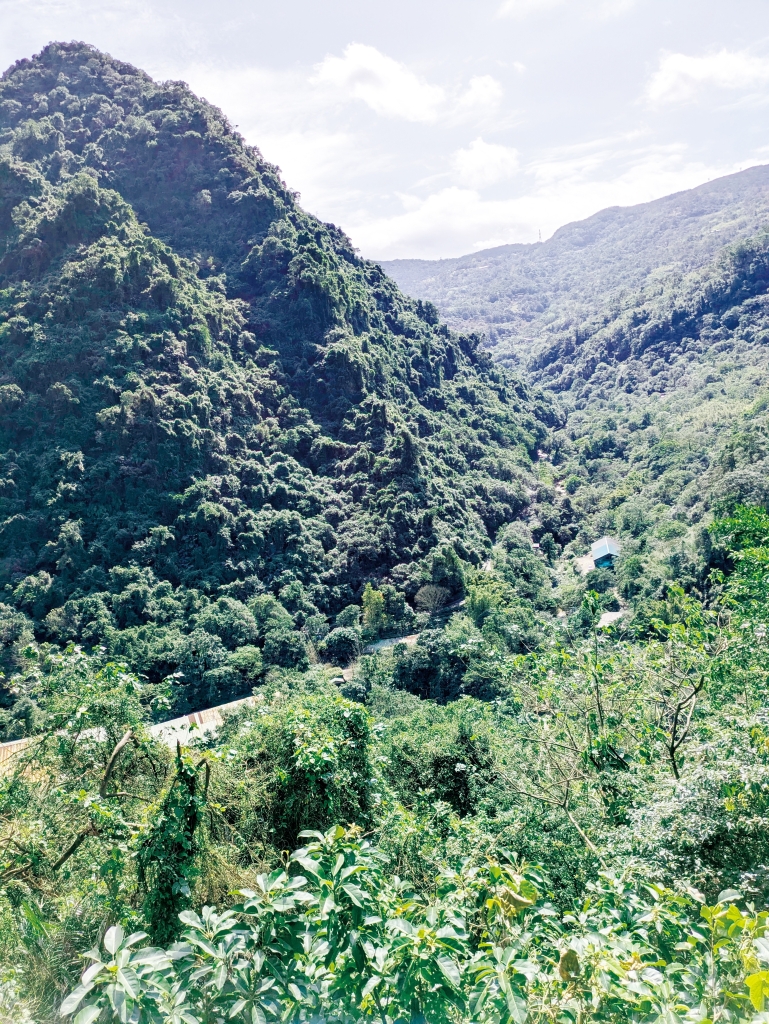
Tsai trekked to homes like these dotted in the hills of Pinglin.
Faith imparted, witness interwoven
Tsai passed away at 100 years old in 2011. Chen Chu-Ying, Tsai’s firstborn, recalls her childhood as "of modest means". The family of three women slept on wooden planks unmatted with tatami, and the girls would flank their mother and be lulled to sleep by Tsai hymning softly. Faith sustained Tsai through thick and thin, and brimmed the family like a gentle light. She took her daughters to Sin-Tiàm Church when they came to middle-school age. The Pinglin congregation met in her house before it had any dedicated space—the rental thereof and removal thither or thence also assisted by Tsai—to pervade the hills with the Gospel. "By the time I was 11, Mother had already got the job at the town office, and manage we did," said Chu-Ying, who used to dig bamboo shoots and do housework with her sister. "We still had to pawn, barter, or sell at the market valuables such as clothes for the occasional meat, though."
What Tsai Chiao accomplished was respect and devotion towards life. Many in Pinglin may have forgotten who delivered them, but there was once a woman who walked the hills and villages and watched over countless families with professionalism and faith upheld.
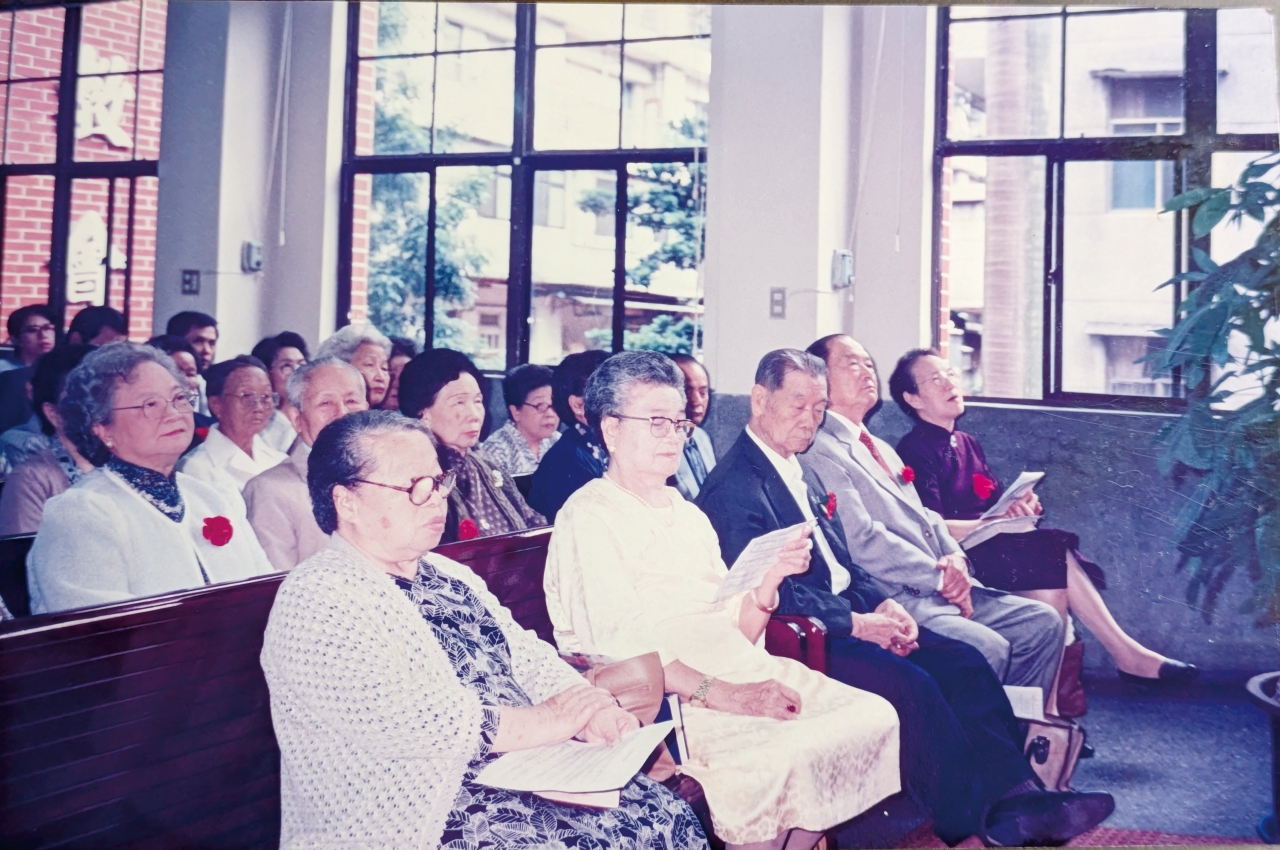 Tsai (front row, first from left) attending a church service