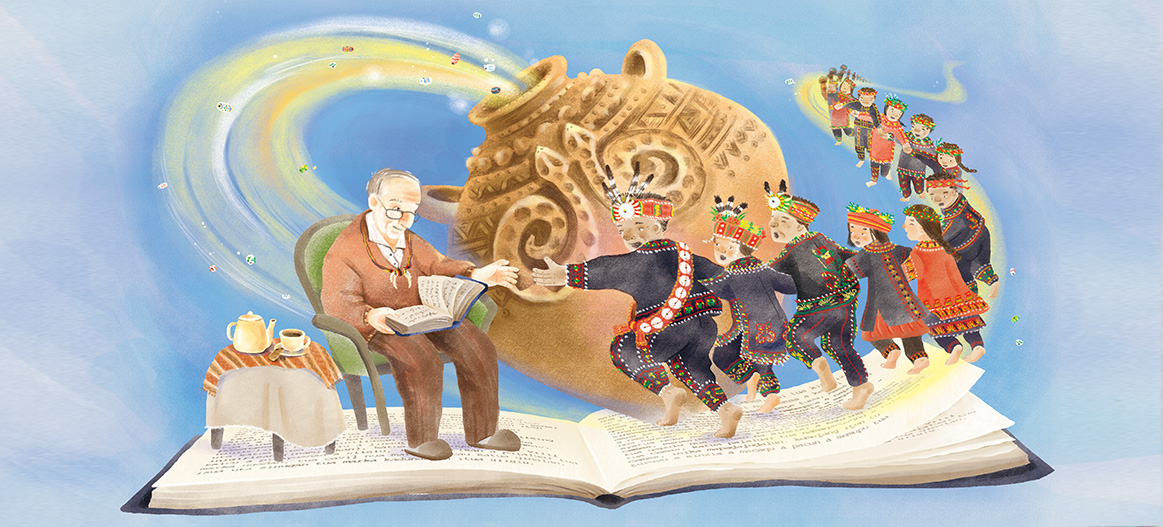
Long-Legged John - The Story of Rev. John Whitehorn【Parent-Child Reading Guide】
點閱次數:15
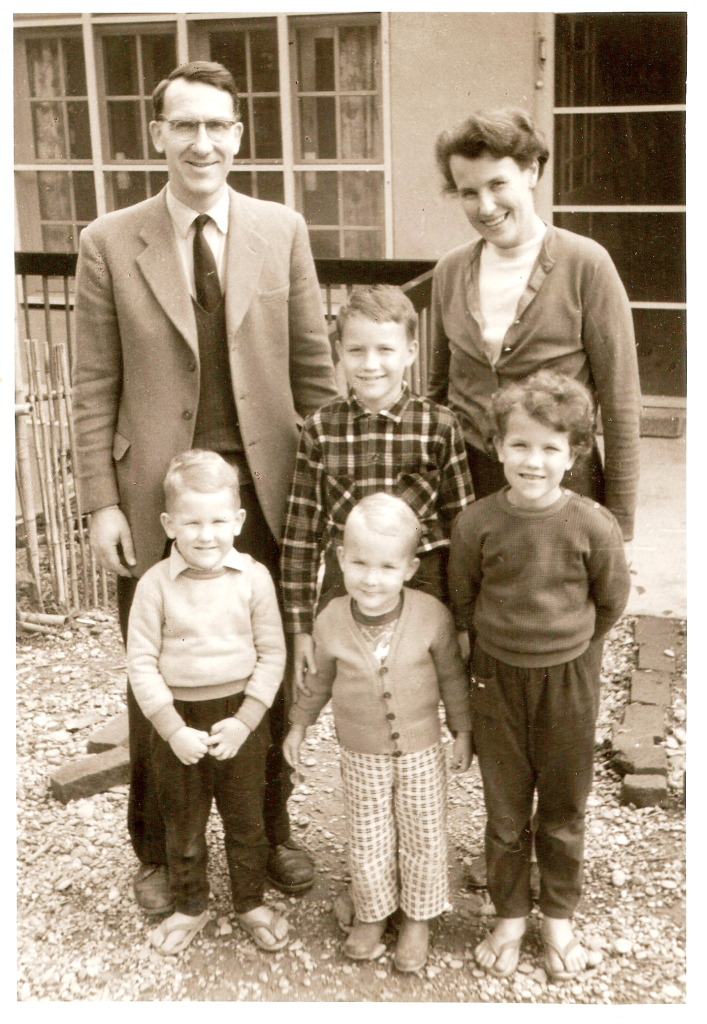
Rev. John Whitethorn and Elizabeth Haslam with their four children at Yu-Shan Seminary
Born on 7 October, 1925, in Kuala Lumpur, Malaysia, Rev. John Whitehorn was the second son of Roy Whitehorn, the overseas minister of a local Presbyterian church there. As par for the course, Roy Whitehorn and his family moved frequently even after they returned to their home country, the United Kingdom. In the end, they settled in Cambridge. Whitehorn had solid training in linguistics. He studied Latin and Greek in high school and university. As a service member, he learnt Japanese and helped with the war crimes trials in Hong Kong after the Second World War. Whitehorn arrived in Taiwan in 1951, when Japanese rule was of the recent past and Japanese could still be used for communicating with the locals. In order to join the mission work in Taiwan, he studied linguistics and phonetics at the School of Oriental and African Studies (SOAS) after graduating from the university. During this time, he also studied Sea Dyak (Iban), a Borneo language that was close to the aboriginal languages of Taiwan.
Preservation and translation of the Paiwan language
During his first three years in Taiwan, Whitehorn learnt Paiwan from Giljegiljaw and Pali. He also made primers to help Paiwan people, particularly the preachers and elders of the church, learn to spell their own language. Enlisting Giljegiljaw and some local preachers, he started translating hymns using a Latin-based alphabet. In October 1952, they published a hymnal that was the first book in history targeted at the Paiwan people while written in their own language.
Compared to hymns, the translation of the Bible was a much more complicated task. At the time, most of the available copies of the Bible in the village were in Japanese. The poetic style of translation made them hard to understand for the locals. As a result, most people could only learn about God through live sermons. Whitehorn found that the first generation of believers had pure faith but only a rather crude understanding of the gospel. These ‘baby Christians’ also faced verbal persecution frequently by non-Christians. Whitehorn thus sensed the urgency of his mission.
Beginning in November 1953, Pari helped with the Bible translation. He would translate Japanese verses into Paiwan, and Whitehorn would then cross-check them with the Koine Greek original text. They encountered several challenges in this process, especially when it came to translating abstract words. In addition, there were more than one dialect of Paiwan. It was thus important to consult the speakers of various dialects. When the Paiwan Bible Translation Committee was established later on, it was decided that the members should comprise speakers of all Paiwan dialects.
During this time, the government started banning Latin-based alphabets in order to force the adoption of Mandarin across Taiwan. Whitehorn thus adapted thirteen Bopomofo symbols to spell some unique Paiwan sounds that were not possible with the standard Bopomofo.
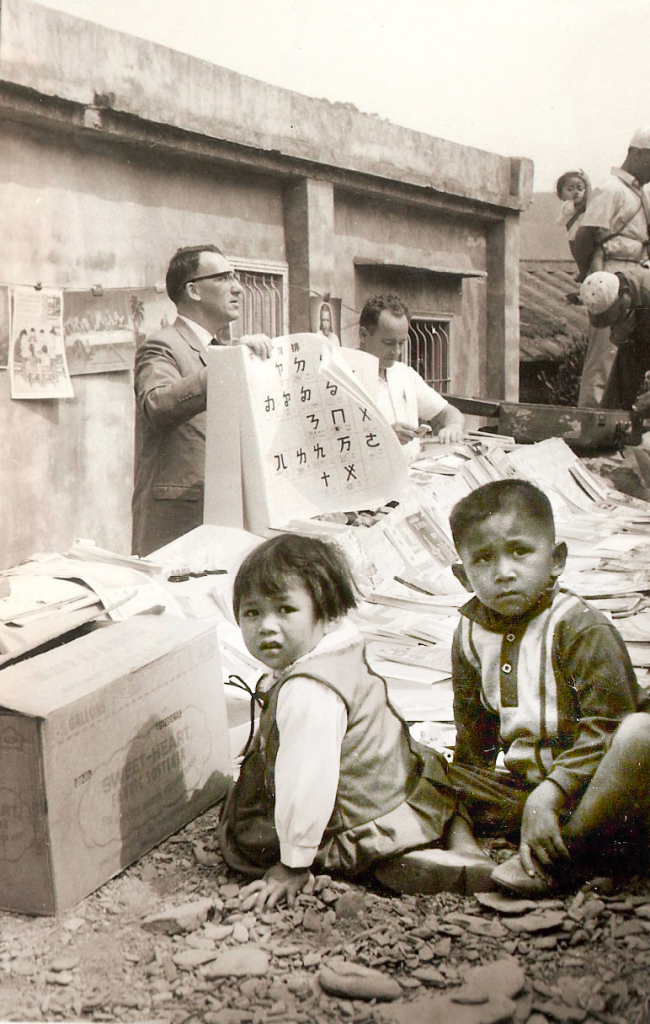
Rev. John Whitethorn distributing posters of tailored Bopomofo for Paiwan in 1970
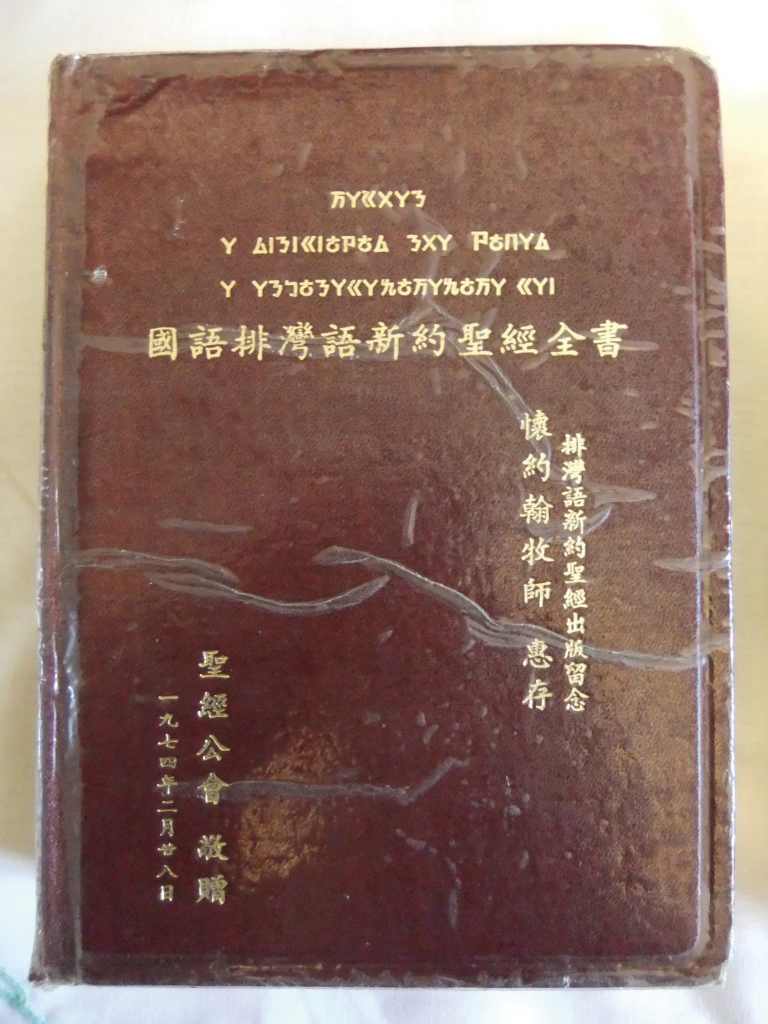
The first Paiwan New Testament
Three phases of mission work
Coming from overseas, Whitehorn spent 19 years altogether in Taiwan, a faraway island from home. This book focuses on the first phase of his mission work in Taiwan (1951–1954). After returning to the UK in 1954, Whitehorn married his then fiancée, Elizabeth Haslam, and was ordained two years later. After that, Whitehorn returned to Taiwan with his wife and first son, David, to start the second phase of his mission work (1956–1961). During this period, Whitehorn participated in Bible translation and served as associate secretary in the Presbyterian Church in Taiwan (1958–1960), responsible for coordinating the work amongst the aboriginal peoples. Elizabeth was able to make use of her medical training to help in a local clinic while also looking after her own family. During this time, John and Elizabeth Whitehorn’s second child, Helen, and third child, Stephen, were both born in Pingtung.
In 1962, John and Elizabeth Whitehorn’s fourth child, Richard, was born in the UK. Two months later, Whitehorn’s whole family travelled to Taiwan and the third phase of his mission work (1962–1970) began. During this time, Whitehorn worked as the Acting Principal of Yu-Shan Theological College and Seminary (1962–1965) and participated again in Bible translation. Elizabeth was diagnosed with cancer later, and the whole family returned home to receive medical treatment and support from relatives. In 1967, Elizabeth had recovered well enough so Whitehorn returned to Taiwan alone to continue the translation work. He was joined by Elizabeth and their children the next year. The third phase of Whitehorn’s mission work in Taiwan was concluded with the completion of the first draft of the Paiwan-language New Testament at the end of 1970.
A humble and committed missionary linguist
Whitehorn committed his whole life to the preservation of the Paiwan language, the translation of the Bible and hymns, and the spreading of the gospel. He appreciated the optimism and hospitality that the Paiwan people maintained despite their harsh living conditions. Seeing the influence of the Han culture on their daily lives, Whitehorn worried that Paiwan people would eventually lose their own cultural roots. On the other hand, he feared that without the guidance of God's Word in their mother tongue, they might scatter like sheep without a shepherd when their faith was challenged.
Like many other missionaries, Whitehorn faced the challenges of cultural and language barriers in a foreign country in addition to the difficulty of striking a balance between work and family. Elizabeth and Stephen died of cancer in 1975 and 1985, respectively. Confronted with the deaths of his loved ones, Whitehorn still devoted himself to God’s work. In 1985, the Bible Society in Taiwan invited him, already London-based, to be an advisor to the translators of the Paiwan-language Old Testament. As a result, he visited Taiwan several times. During one of his visits, he was even hospitalized due to overwork.
In April 1993, the Paiwan-language Bible in Latin script was published. Whitehorn completed his mission and returned to the UK. A year later, he met Elizabeth Bruce while serving at the Community for Reconciliation in Birmingham. They got married in 2002 and moved to Cambridge in 2006. They dedicated themselves to serving at St. Columba’s Church, while also spending time attending choir and the University of the Third Age in Cambridge (U3AC). Their marriage lasted two decades until Whitehorn passed away at the age of 97 on 10 March, 2022.
Although Rev. John Whitehorn believed that his spiritual calling was linguistic work rather than pastoring, the example he set as a humble Christian who dedicated his whole life to mission work among the Paiwan had led many of them to God. He believed that the Bible, available in the mother tongue, played a key role in not only preserving the Paiwan language and culture, but also nurturing the spiritual lives of Paiwan Christians.
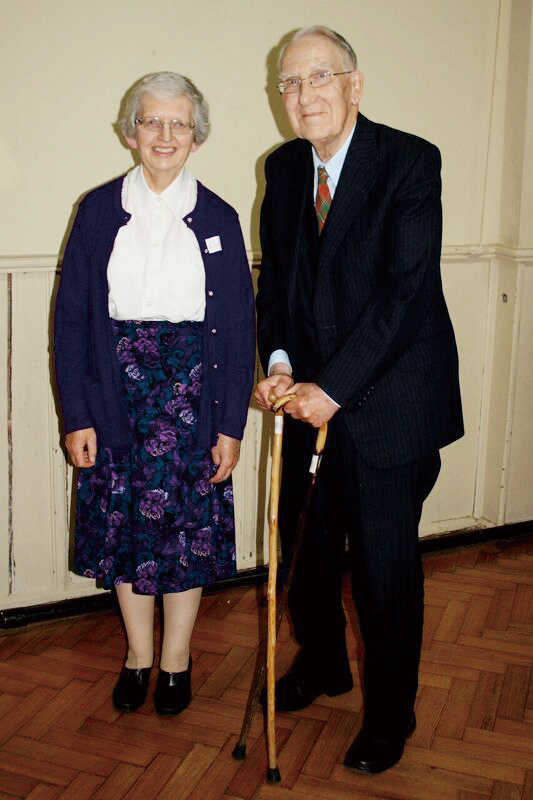
Rev. John Whitethorn and Elizabeth Bruce at John's 90th birthday party
.Photos taken from Grandpa, Dog and Cat - the Biography of John Whitehorn.